
Set up the account without confusing the player with the service on Fire TV Stick. Use platform checks, a controlled test and a useful support record.
Start with the exact symptom
A successful first setup has three parts: a compatible player, a valid subscription and a stable route from the device to the source. Install one player and prove one live channel before importing extras.
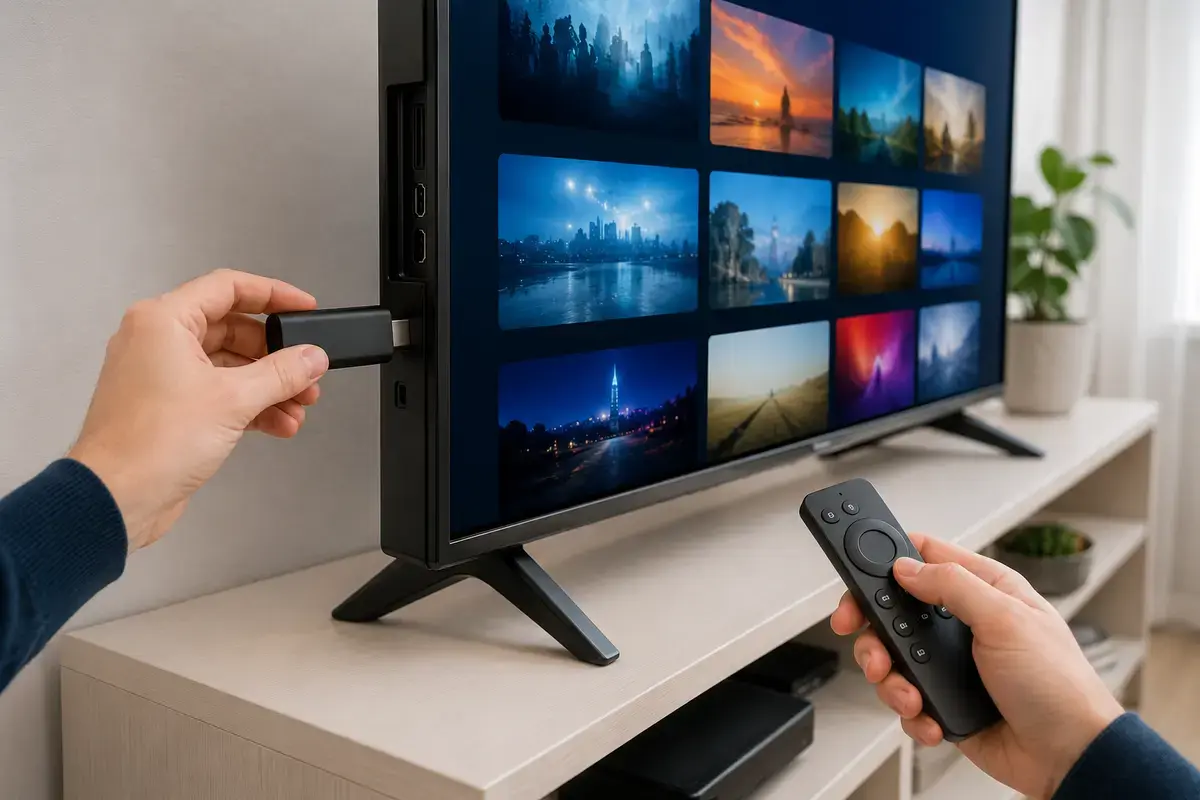
For Fire TV Stick, the relevant platform is Fire OS or model-specific operating system. Start by identifying the installed player and version instead of assuming that every device sold under a similar name has the same menus. APK compatibility varies by model and operating system; sideloading is not a universal Fire TV instruction.
What to record before changing anything
Record the exact model, operating system, player name and account format. Keep the issued server address separate from the username and password.
Pay attention to remote navigation, internal storage, sleep settings and the tv hdmi connection. This device context helps distinguish a local control or compatibility problem from the service-account and source checks that apply to every player.
A controlled checklist
- Confirm the baseline
Use the device app store for a supported player; only use an Android package if your exact Fire TV model supports it.
- Run the first check
Open the player login screen and use only the field type that matches the issued account: username/password, M3U playlist, portal or device registration. Do not mix them.
- Compare one result
Open one live channel, leave it playing, then test a second category and a short on-demand item. This shows whether access and playback both work.
- Use the device-specific route
Use the device app store for a supported player; only use an Android package if your exact Fire TV model supports it.
- Confirm the outcome
The login succeeds, categories load and at least one supported live and on-demand source plays.
Read the result, then choose the next step
For this first setup check, a useful result is: The login succeeds, categories load and at least one supported live and on-demand source plays. Keep the source, account and player version unchanged long enough to compare the action you took. If another category works while the intended one fails, report the exact affected group rather than saying the entire service is offline.
If the same symptom occurs on a second supported player or device, stop the first active session before testing the next when the account permits only one connection. A connection-limit problem should not be mistaken for a device defect. Note what remained the same and what changed so support can repeat the comparison.
Avoid the common detour
Changing players repeatedly before confirming the account makes it difficult to tell an installation problem from a credential problem.
APK compatibility varies by model and operating system; sideloading is not a universal Fire TV instruction.
Do not enter a new account, reset the whole device and change the network in a single attempt. That combination can remove the original evidence and leave several possible causes. Keep a small record of each result and reverse an unsuccessful setting change.
A first-session acceptance test
Treat first setup as a small acceptance test. Signing in proves that the account can reach a service entry point, but it does not prove that the device can decode every source. Loading a catalogue proves that some account data arrived, but it does not prove that a selected channel is currently playable. Keep those milestones separate in your notes.
Use one ordinary live source and one short on-demand item as a baseline. Watch the live source long enough to notice a repeated interruption, then test pause and seek on the on-demand item. Check the selected output and any language track that you actually need. If a control is absent in the player, record that limitation rather than inventing an Android menu path for a different platform.
Only after that baseline works should you spend time arranging favourites, hiding categories or importing extra guide sources. This order reduces the amount of local setup you could lose if you later need another compatible player. Keep the account details privately and note how the installed application stores its local preferences.
| Observed result | Useful next action |
|---|---|
| App opens but no login route is obvious | Check the exact app identity and which access format it accepts. |
| Login rejected | Verify the issued server, credentials and account status. |
| Login works but list is empty | Check category filters, the selected account and a normal refresh. |
| List loads but one source fails | Compare another source before reinstalling the player. |
| Live works but VOD fails | Check the exact title and on-demand area separately. |
| Video works but sound does not | Use the audio track and output checklist instead of changing the account. |
A support note you can copy
Device: Fire TV Stick
Operating system: Fire OS or model-specific operating system
Player and version: [installed name and build]
Problem: First setup
Exact source or title: [name, season or episode if relevant]
Time and time zone: [when it happened]
Check completed: [one action and its result]
Send this through the published private support route. Conceal passwords, complete playlist links, payment details and unrelated personal information in any attachment. A clear device and symptom report is more useful than a screenshot that exposes account access.
Discuss this setupChoose the follow-up that matches the evidence
If this is your first setup on Fire TV Stick, return to the device guide and confirm the supported player route. If playback worked previously, keep the known-working account and investigate the changed condition: source, player update, storage, network or expiry.
Before changing a subscription term, test the channels, titles, languages and controls you actually need. The website pricing table shows the complete USD term total, while app-store licences or separate player activation fees should be checked with the relevant developer. A successful test today is evidence for your decision, not a guarantee that every source will remain unchanged.
Continue with the relevant guide
Useful next steps
Guide
Device setup directory
Check the exact platform before installing.
Read the guideGuide
Player names and codes
Find the provider-listed app entry.
Read the guideGuide
Support by symptom
Collect a focused report before changing everything.
Read the guide